
20261112102544.png)
Lot n° 13
Estimation :
250 - 350
EUR
Result without fees
Result
: 250EUR
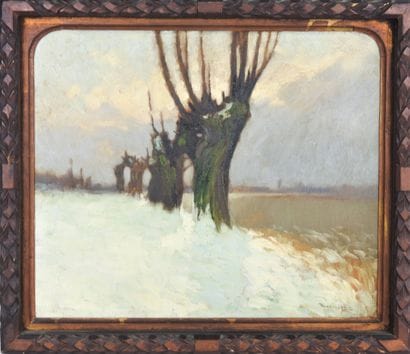
Espérance-Léon BROQUET (Paris, November 1, 1869 - 1936). Tre - Lot 13
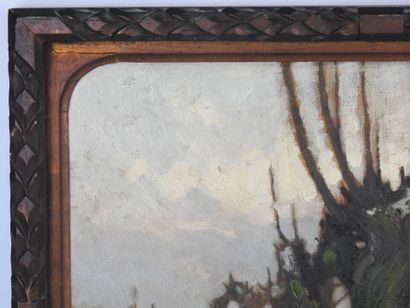
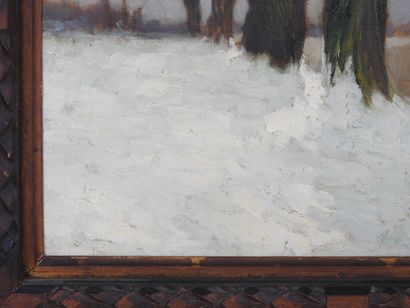
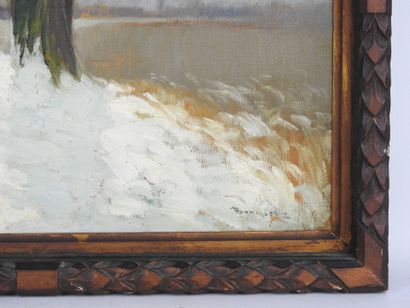
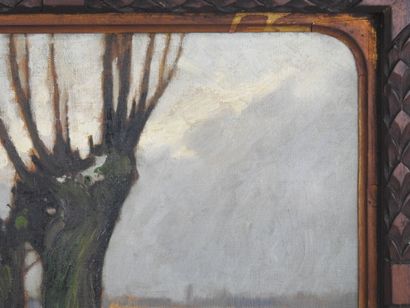
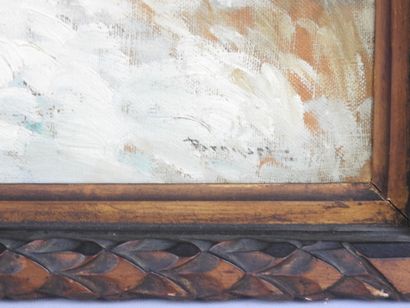
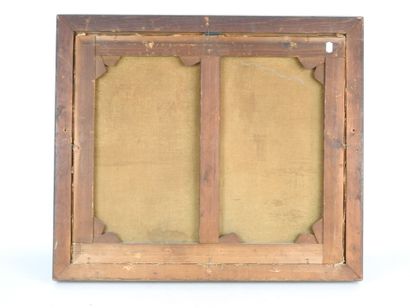
Espérance-Léon BROQUET (Paris, November 1, 1869 - 1936). Trees near a river in the snow. Oil on canvas signed lower right, circa 1915. 46 x 55 cm. Carved wooden frame 55 x 63 cm
Provenance: private collection from Touraine, focusing on Beaux-Arts competitions and the Prix de Rome in the 19th and early 20th centuries, as well as academic works.
A pupil of Guillemet, Nozal and Monet, Broquet-Léon, whose real name was Espérance Léon Broquet, pursued a career as a plein-air painter, traveling the length and breadth of France from Gravelines to Marcilly in the Aube, Martigues and, later, Concarneau and Châteauroux. He exhibited at the Salon from 1904 to 1931, where the sincerity of his talent was particularly appreciated: third-class medal in 1912, second-class and hors-concours the following year. During the Great War, abandoning his paintbrushes, he enlisted at the age of 45 in a hussar squadron. Mobilized in the 48th territorial regiment on August 4, 1914, he was in the Marne as a GVC between December 1915 and April 1917; seconded to the 22nd COA section in early August 1918 as a painter seconded to the Musée de l'Armée; in mid-August, volunteering to be sent to the 4th light brigade in the Marne, he was transferred to the 2nd squadron of the 4th hussars, where he remained until mid-December and had his baptism of fire. He worked extensively around the Saint-Gond marshes and in the Souain sector, publishing his Carnet de route d'un territorial around 1917-1918. Batailles de la Marne et de la Champagne; an album of 23 etchings, based on his paintings of the front. In the trenches, at the heart of the action, he traces the highlights of the Marne holocaust with expressive graphics and vigorous brushwork. On this occasion, La voie sacrée became his claim to fame. He owes his fame to these drawings and engravings made in the mud of Champagne.
After this dark period, the painter returned to his brushes and easel to pursue his work in a constant search for light and colorful symphonies, as his master had taught him, returning regularly to his studio on Boulevard Raspail. He was a widower with three children when he moved to Concarneau around 1929. By then, he was a well-known and respected painter. At the age of 60, Broquet met Anne Le Du, "a charming and modest worker", whom he married on October 10, 1929. A memorable wedding attended by Barnoin, Eschbach, Delpy, Harel, framer Hervé Gorrec and photographer Le Merdy. The couple adopted a niece and lived in Le Passage for several years. The port of Concarneau and the surrounding area, as well as the Bigouden region and Ouessant, became sources of inspiration for the painter. He also did some decorations for various establishments in the region. The couple traveled before settling permanently in Châteauroux. Broquet-Léon died there in 1936. Two exhibitions at the Galerie Georges Petit in 1922 and 1926 marked his career. In 1929, his exhibition at Ti-Chupen-Gwenn, at the home of Mr. and Mrs. Julien Le Clinche in Concarneau, was showered with praise by the journalist from La Dépêche, quoting F. de Joannis: "Broquet-Léon characterizes everything the imagination can conjure up around this word. He is the typical artist, with his abruptnesses, his revolts, his hardnesses and his marvelous sweetnesses... an artist, and with what simplicity. The freedom of his form is part of his independent talent, governed only by the beat of his heart and the receptivity of his gaze...! ! "" (Yvon Le Floc'h, Ouest-France, January 3, 1989).
My orders
Sale information
Sales conditions
Return to catalogue